Workers' Compensation for Bungee Jump Operations: Classification, Cost, and Coverage
By Contractors Choice Agency
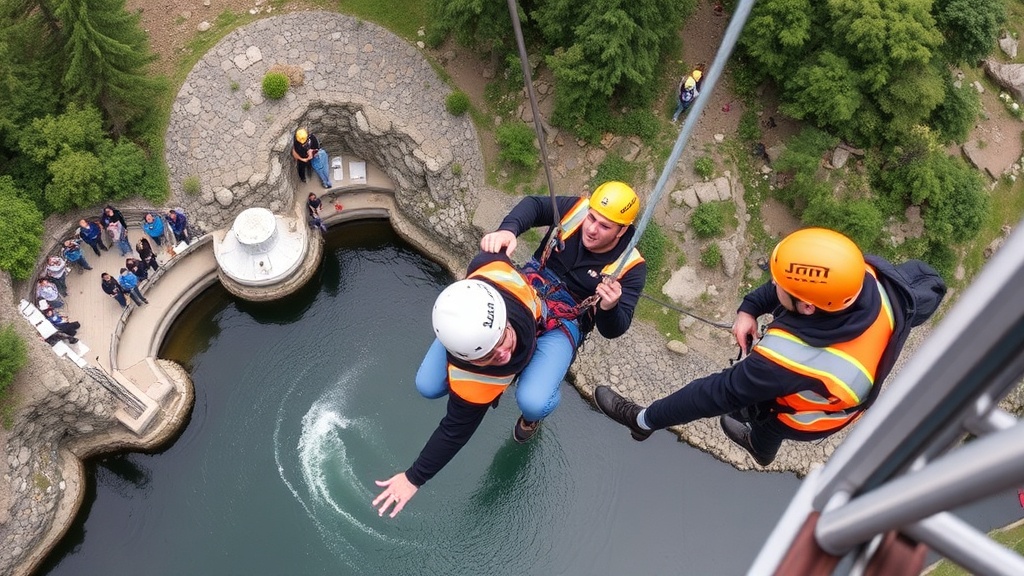
Bungee jump operations employ people who work in genuinely high-risk conditions — jump masters working at elevation, rigging technicians handling loads under tension, and ground crew managing excited participants under physical stress. Workers' compensation isn't just a legal requirement in most states; for extreme sports operations, it's the coverage that keeps a serious employee injury from becoming a business-ending event.
Workers' Compensation Basics for Extreme Sports Operators
Workers' compensation provides two primary benefits to injured employees:
Medical benefits — pays all reasonable and necessary medical treatment for work-related injuries and illnesses. There's no deductible, co-pay, or coverage limit for medical treatment in most states. If a jump master falls from a platform, workers' comp pays the ER, the surgery, the rehabilitation, and the follow-up care.
Wage replacement — pays a percentage of the employee's pre-injury wages (typically 66-75% in most states) during the period they're unable to work due to a work-related injury. This benefit continues until the employee can return to work or reaches maximum medical improvement.
Workers' comp is the exclusive remedy in most states — meaning an injured employee cannot sue their employer for a work-related injury if workers' comp coverage is in place. This employer protection is a critical benefit of carrying proper coverage.
Employee Classification for Bungee Jump Operations
Classification codes drive workers' compensation premiums. Misclassification — assigning employees to lower-risk codes than their actual duties warrant — creates coverage disputes and premium audits. Understanding the right codes for your crew is essential.
Jump masters and crane operators: These employees work at elevation and manage the mechanical operation of the bungee system. Their classification typically falls under codes related to amusement and entertainment operations, with specific codes for aerial work or crane operation depending on the carrier.
Rigging technicians: Ground crew who set up and tear down the bungee system, manage equipment loading, and handle rigging work. Classification depends on whether they perform installation (construction-type codes) or operations maintenance.
Customer service and ticketing staff: Lower-risk classification as clerical or retail operations employees. These staff typically have significantly lower premium rates than operational crew.
Supervisors and managers: Often classified based on the operations they supervise. A manager who regularly works on the platform with jump crew may be classified at the operational rate.
State-Specific Requirements
Workers' compensation is state-administered, and requirements vary significantly:
Coverage thresholds: Most states require workers' comp when you have one or more employees. Some states exempt very small employers (one or two employees), though this varies and changes regularly.
Independent contractor considerations: States are increasingly aggressive about reclassifying workers as employees for workers' comp purposes. If you use "independent contractor" jump masters or crew who work regular schedules under your direction, many states will treat them as employees for coverage purposes.
Multi-state operations: For mobile bungee operations that travel to fairs and festivals across multiple states, your policy must provide coverage in every state where your employees work. Standard policies include most states; monopolistic states (Ohio, Washington, Wyoming, North Dakota) require separate state-fund coverage.
Owner exemptions: Many states allow business owners to exempt themselves from workers' comp, though this leaves personal injury exposure uninsured. Carefully evaluate whether owner exemptions make sense for your operation given the physical nature of bungee jump work.
The Injury Profile for Bungee Jump Workers
Understanding the actual injury risks helps you evaluate adequate coverage:
Height-related injuries: Jump masters and rigging crew working on platforms and crane arms face fall risk. Falls from elevation are among the most severe and costly workers' comp claims.
Equipment handling injuries: Setting up and breaking down bungee systems involves heavy equipment — cables under tension, structural components, crane arm assembly. Strains, sprains, and crush injuries from equipment handling are common.
Repetitive stress: Jump masters performing repetitive harnessing, safety checking, and participant management over long event days develop repetitive stress injuries in shoulders, wrists, and knees.
Participant management injuries: Ground crew managing excited or anxious participants — catching them on landing, assisting with harness removal — face unpredictable physical contact that can cause injury.
Environmental exposures: Outdoor operation in heat, cold, and variable weather conditions creates exposure to heat illness, cold exposure, and slip-and-fall risk on wet platforms and surfaces.
Premium Drivers and Cost Management
Workers' comp premiums are calculated based on payroll and classification code rates, with modifications based on your claims history (experience modification factor or "ex-mod"). Key cost drivers:
Payroll: The base for premium calculation. Higher payroll = higher base premium.
Classification rates: Rates for amusement operations and aerial work are higher than rates for clerical work. Accurate classification ensures you're not overpaying for workers classified at incorrect rates.
Experience modification: Operators with clean safety records (no or low claims) develop favorable experience modifications over time, reducing premium. Operators with frequent or severe claims develop adverse modifications that significantly increase premium.
State fund vs. private market: Some states offer private market competition; others require state fund coverage. Private market carriers sometimes offer more competitive rates for specialty operations.
Safety Programs That Reduce Claims
The most effective premium control is not having claims. Investments in safety programs that reduce worker injuries pay for themselves through lower ex-mod factors:
- Formal fall protection training for all personnel working at height
- Equipment inspection checklists before every operational period
- Clear protocols for participant management to protect ground crew
- Heat illness prevention program for outdoor summer events
- Written emergency response procedures with regular crew training
Contact Contractors Choice Agency to discuss workers' compensation coverage for your bungee jump operation, including proper classification for your specific crew composition and multi-state coverage for mobile operators.
Need this coverage for your bungee jump operation?
Get a real quote in about 15 minutes — we shop A-rated specialty extreme sports markets.